
A Woman Is Screaming
WINTER 2026, SHORT STORY, 2500 WORDS
Prefer to read this as an EPUB or PDF?
Join our Patreon and instantly download issue 41:
Someone must have broken in. She’d never have left the door unlatched, much less ajar, with a naked sliver of her private life available from a certain angle to anyone sly enough to notice as they walked by. It wasn’t like her to miss a step in her routine, important or minor, and certainly not a step so vital as securing her front door before venturing forth. Maybe she’d forgotten the deadbolt now and then, or, lulled into a sense of safety over time, she’d allowed habitual familiarity with this known location where she’d so long eluded violence or harassment to embolden her. She’d be deliberately careless sometimes, she who should know better, by her profession and hard-earned wisdom, know better than to tempt fate.
She’d revel in defying her conditioned fear, declare herself recovered and impervious and go to the laundry room to start a load without locking up, or run down to the lobby to retrieve a package. Across the street to grab a snack.
The thrill of such small freedoms, saying fuck off into the sun to hypervigilance, the luxury of risk; but not this morning, not today. Not all day long at work and into the evening after dinner and drinks with friends and stretching out to ten or twelve hours of absence baring her home to strangers, her property to assault. She wouldn’t go that far.
She wouldn’t try to resurrect the past and give it a makeover or re-cast the roles so that someone else suffers the damage this time around. She’s not cruel like that. Emotion doesn’t drive her, or if it does, it’s a many-layered costume restricting the sensationalism of arousal, nausea, and tears required by listeners whose sympathy frankly angers her more than it helps, and so she has disposed of the costume and often gone silent, wearing instead no emotion that anyone else can understand.
She’s stepped back from the door with a gasp. Leapt back, really. One sharp gasp and then she holds her breath. Her key still points at the doorknob, the ring and carabiners gripped tightly in her hand, the cool metal of the keys warming as her palm floods with its own animal instincts and sends an alarm signal translated as sweat.
If she goes inside, she knows how the story goes. A killer or rapist awaits.
Stillness behind the door, its dark green surface suddenly wildly alive to her scanning eyes. Layers repainted hastily between tenants have accumulated over time into a thick, writhing texture coating the old wood in a false liquid sheen. Droplets escape containment to spot the hardware. Crevices and drips unsanded for ages and lumping like green pustules, more and more of them the longer she stares in hypervigilance, an infected skin over her threshold she has touched daily, without giving it a thought. Daily, she hasn’t noticed how it undulates. A skin ready to burst.
This threatening plane that encases her safety now splits. Two and a half inches of darkness from top to bottom, a grey slice of twilight where a murderer or sex criminal hides.
Or maybe a maintenance man for relief not quite comic, but calling into question every suspicion she has yet to express. Every wolf she has cried under her breath. Someone will laugh at her, at her perceived overreaction to the warnings of subtle stimuli only she can detect. They’ll mock her cowardice and write off crimes yet to happen, unaware that her stomach now digests them in advance like a meal of concrete.
Someone will emerge to laugh at her distress. Someone who has never been bitten bites hardest, though she’s often been surprised by how brutally the camaraderie of survivors demands evidence.
If she hesitates or asks for help, she’s weak and foolish. If she goes inside, she’s to blame for being careless. Asking for it. Or maybe she’s more perverse, braving the set piece with its gratuitous violence to expose the truth kept just off camera, just out of plain sight.
Maybe every home contains a rapist. Maybe we’re all killers in the dark.
Every woman she’s seen murdered on screen deserves an audience, but this is not how it happens in real life. Even if it’s only the maintenance man, even if he’s come and gone and left a receipt of radiators drained or skylight caulked, she’ll hesitate the next day before putting on her underwear, wondering if he’s fondled them. Her shoulders will tense when she gets in bed, uncertain if she can smell a stranger’s scent, and if the indentation visible in the blankets was there when she left in a rush for work that morning, or if he has rubbed his body on this spot where she now curls, rigid, unable to sleep. She’ll have scrubbed the bathroom repeatedly, staying up much too late, trying to make sure every smear of toothpaste or soap on the basin is removed and sterilized with bleach in case the stain isn’t soap or toothpaste, in case this is where he chose to masturbate.
She’ll give up trying to sleep and throw everything in a laundry basket and then stand paralyzed inside the apartment, holding it against her hip with one fist around the basket’s grip and her other hand on the doorknob, unmoving. Willing her wrist to turn or her fingers to go through the necessary motions, yet remaining at this impasse in the imagined anxiety of the near future, mirroring her anxiety and frozen inaction right now as she peers into the long, dark shadow of the unknown, the thin gap between jamb and door.
Her life inside unmoving, invisible, invaded, the broken barrier revealing inchoate grey behind the writhing green paint; it may be the stillness of absence, the stillness of expectation, or the stillness of an impatient fate. What grows in that grey as she hovers, clutching her handbag and junk-mail against her chest, her chest hardly moving, once again breathing, yet breathing so quietly, so softly and shallowly; what grows in the grey imperceptibly shifts.
Within the shadows, something assembles into form as she discovers her breath.
The whisper of stockings on legs that cross and uncross, a flicker of mistaken identity that mimics the light and dark of the grey as it is chopped up by passing traffic through parted curtains and window sheers. She leans closer. The lights go quiet.
Another woman.
If the shadows can leak out through this sliver, the other woman could approach the door and throw it open. Swiftly, her legs will scissor across carpet. Her slender hand is urgent and deft. She rips the green skin from the threshold.
Confronting the intruder, will the woman within see her own face? Will she who stands outside erupt from her interminable pause into apologies, pleas, or threats? Most importantly to the frozen lurker on the threshold, which of these two women will wield the knife?
In any scene like this, she knows the rule: there must be a blonde and a brunette. They don’t represent good and evil, or Madonna and whore, or any other common dichotomy assigned by tradition or popular culture. There’s no vulgar or implicit meaning to the color of the wigs or to which one wears which. The necessity of a simple shorthand for differentiation demands their use, especially if the face is the same as she fears it will be if the light changes and chops again, or if she continues to lean ever closer to the slit of shadow, and with a gentle, surreptitious push she increases the angle of access enough to catch herself unawares, the other woman who sniffles in resignation and pretends to herself she’s not still shaking as she changes out of her torn things and stuffs them in the trash. Or maybe the wig slips and she looks up, aware she is being watched, aware her life now has no barriers. Her home has been displaced.
Outside, her stomach rumbles with disgust from chewing on its own fear, another animal part with its own agenda like her slick, cold hand clenching the keyring, another warning sign that her suspended animation can’t outlast the violence or destiny or joke that is being played upon her. The hallway can’t remain neutral forever, has never been truly neutral in fact as she can see by the inconsistency of the dim nipple of overhead light and the scuffs and gouges repaired or not in the plaster. Everywhere, the brutality of constant action has left scars that refuse to let her cocoon and heal.
The flooring is hard in high heels, loud like an alarm when from her sweating, unstable fingers the keys clatter out of her grip. Loud like an alarm when her feet should say run, run before the door opens and she catches you, or you her, or he drags you inside and changes your future, or ends it. Run, before you see the face behind the killer’s green mask.
Her feet like stubborn children whine in their high heels as her arches and toes cramp. Below her, the keys sink. The doorway is submerged below water now, and this odd development seems unshocking to her, a problem easy enough to fix.
She releases her feet from their leather straps and stacks the shoes beside her junk-mail and handbag on the doormat. The sigh of her skirts as she bends down to dive doesn’t tell her reliably if she is the brunette or the blonde, and at this moment she can’t remember. She’s been both at one time or another, both the woman and the other, and the water is too clouded with the building’s crumbling decay and the evidence of age to give her a hint by reflection of which she will be tonight. If she looks at a long strand to decide, she won’t be able to distinguish wigs from truth from dye jobs, because there are many forms of deception that occur when a killer is on the loose.
Ingenious in her disguise, she dives fully clothed despite her outfit’s tasteful elegance and the potential damage to its carefully chosen fabrics, despite the extra weight of sodden layers that will hinder her freedom of movement and control of her limbs as she swims. She holds her breath and sinks down, realizing she doesn’t need her keys anymore and never will again, for the grey has swallowed her through its slender mouth and taken her in past the bubbling green skin.
That frivolous door-skin has hardly been a barrier to harm, offering protection as it has in the paradoxical configuration of a way in. It now dissipates completely under the water like the illusion it has always been.
In liquid shadow she hangs suspended, floating below her ceiling and holding her breath. Her less weighty household things drift in the murk as the deep green droplets tint and obscure her surroundings, encasing the apartment in the fog of an underwater forest. She waves both arms to shift position, pushing against what suspends her and aching toward progress. Black needles poke at her lungs with a fervent desire for air, but she has incredible self-control and will resist this instinct like so many other instincts that have failed to serve her in the past.
The past is what has sunk her in this nightmare cliché, and like the cliché she seems fated to embrace, she makes for the kitchen and, with a hand no longer slick with sweat but firm in the murk, pulls a knife from the block and holds it up.
A fast figure or shadow flows past from behind. She catches the change in light and turns. Curtains or waves suggest the intruder’s path.
Pushing away at stubborn water with her arms, with the crisscross kicking of her sheer-stockinged feet, she fights the delay of her heavy garments and the piercing need in her lungs. Pursuing the intruder into the bedroom, knife raised, hair afloat, eyes burning in the dirty water; no one. Closet empty, corners uninhabited. Nothing under the bed. Until a hand reaches from under the blankets above, brushing the back of her neck.
She jolts up, though the jolt is slow, impeded by her state of immersion. Beneath undulating bedclothes, her body, her other body, her hand of waterlogged and plastic-looking, of distant and puzzling flesh set adrift and jutting from her bloated body. The other woman body-melting in fast-forward decay. The woman locked behind the door in fear.
Bubbles empty the body of gasses and the skin deflates, caving in over deliquescing organ and protruding bone. She drops the knife. It floats. The wig slips, but it is the body’s scalp sloughing away, not a fake, neither blonde or brunette, sliding into invisible murk like an octopus, unveiling her bone pate. Pulling away the used rag of her face.
She cries out into the muffling water, a drowned cry that no one but she can hear. The corpse’s fear doesn’t faze her. She claims it. She throws her arms around the other, lifts it from the bed intent on rescue, lugging the torso out, out, out.
Deteriorated tissues unravel with each kick through the liquid gloom. Bones detach and drift or settle. The skeleton comes apart, leaving only the empty skull clasped lovingly and grievingly against her chest.
If those lips could speak, they might ask her if, once opened, a door can’t be closed; or is it the other way around? They might break free through the green skin of liquid and make a sound. But because this submerged ending is reality and the nightmare holds her frozen before an unlocked door, neither open nor closed but ajar, she returns alone to the impasse at the threshold where she stands in singular paralysis, key raised and pointed toward the shadow-sliver, the gap.
She can’t make a sound when the hall, never neutral and now aggressively insistent, echoes as the realtor approaches with a potential tenant. She can’t resist their passage when the two of them walk through her and into the ectoplasm where she floats.
They don’t see the disarray she’s left behind, the months of trash not taken out, of laundry re-worn and then rinsed, of clothes and underwear left draped over every surface to dry stiff. They don’t recognize it is she wielding knives at thin air in the dark, or shivering as she grows emaciated on the bed where her blankets offer too little protection and she pushes the dresser and nightstands and couch and coffee table against the front door, and then the fridge when it’s empty, every lamp, every book, every chair.
They don’t hear her cry out when she finds herself, though if the new tenant has pets like the one before and the others before that, a dog or a cat might stare intently at the front door on certain evenings. They might refuse to eat in one particular corner of the kitchen where the stains have been erased, and whine or mewl long into the night and go suddenly silent at the foot of the bed.

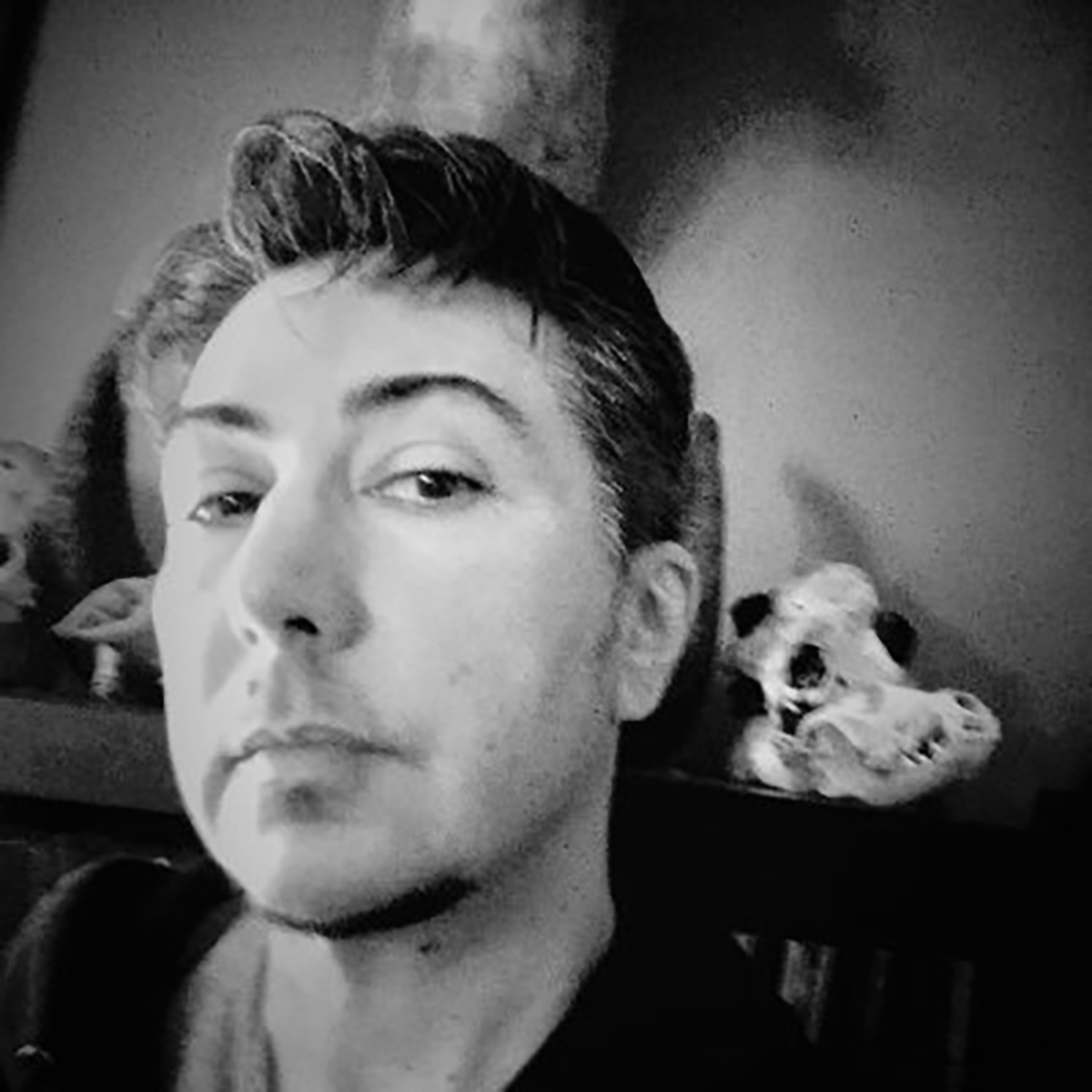
Joe Koch writes literary horror and surrealist trash. Their books include The Wingspan of Severed Hands, Convulsive, Invaginies, and The Couvade, which received a 2019 Shirley Jackson Award nomination. His short work appears in Nightmare Magazine, Southwest Review, Vastarien, The Mad Butterfly’s Ball, and many others. Find Joe (he/they) online at horrorsong.blog.